What makes LinkedIn lead generation different from cold email for B2B sales?
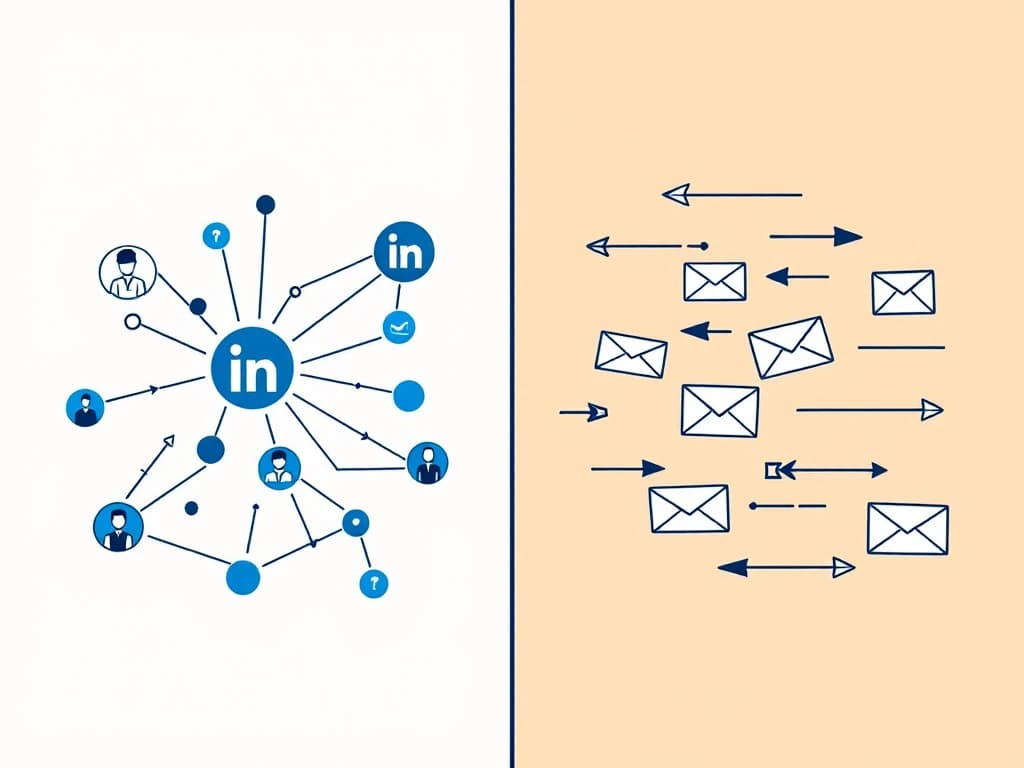
LinkedIn lead generation differs from cold email primarily through its social context and relationship-building foundation. LinkedIn enables you to build familiarity and trust before direct outreach through profile visibility, mutual connections, and content engagement. This social proof creates warmer prospects with higher response rates, while email relies on interruption-based messaging to unknown recipients. The platforms also differ significantly in targeting capabilities, compliance requirements, and integration potential.
Why does LinkedIn lead generation feel more personal than cold email?
LinkedIn creates parasocial relationships where prospects develop familiarity with you before any direct contact occurs. Unlike cold email, which arrives unexpectedly in someone's inbox, LinkedIn allows prospects to see your professional background, mutual connections, and shared content engagement before you reach out.
This social context transforms your outreach from interruption to invitation. When you connect with someone on LinkedIn, they can immediately view your profile, see mutual connections, and understand your professional credibility. Your prospects might have already seen your posts in their feed, creating recognition that makes your message feel less intrusive.
The psychological impact of social proof plays a crucial role here. Mutual connections act as implicit endorsements, while your visible engagement with industry content demonstrates expertise and shared interests. This visibility creates what marketing psychology calls the "mere exposure effect" - people naturally feel more positive about individuals they've encountered multiple times, even passively.
Cold email lacks this foundation entirely. Recipients receive messages from complete strangers with no context beyond what you provide in that single message. There's no opportunity to build familiarity beforehand, making every email a completely cold interaction that relies purely on your message content to establish credibility.
What makes LinkedIn prospects more qualified than cold email lists?
LinkedIn provides real-time professional data and behavioral signals that enable precise targeting based on current job roles, company changes, and engagement patterns. Email databases often contain outdated information and lack the rich professional context available through LinkedIn profiles.
LinkedIn's platform offers immediate access to detailed professional information including current position, company size, industry, recent job changes, and career progression. You can see when someone changes roles, gets promoted, or joins a new company - all valuable timing indicators for B2B outreach. This information updates automatically as professionals maintain their profiles.
The platform also reveals behavioral signals through content engagement, post activity, and connection patterns. You can identify prospects who engage with industry-relevant content, participate in professional discussions, or share insights about their business challenges. These signals indicate genuine interest and active participation in professional networks.
Email lists, by contrast, typically provide static information that becomes outdated quickly. Job titles change, people switch companies, and email addresses become invalid. Even purchased lists often lack the depth of professional context needed for effective B2B targeting, forcing you to rely on basic demographic data rather than rich professional insights.
How do response rates compare between LinkedIn messages and cold emails?
LinkedIn messages typically achieve higher response rates than cold emails due to the platform's social context and the familiarity prospects develop through profile visibility and mutual connections. The social proof inherent in LinkedIn interactions creates warmer initial contact points compared to unsolicited email outreach.
Several factors contribute to LinkedIn's higher engagement rates. The platform's professional context sets appropriate expectations for business conversations, while the ability to view profiles before responding helps prospects understand your credibility and relevance. Additionally, LinkedIn's messaging interface feels less intrusive than email, as users expect professional networking communications on the platform.
The quality of responses also tends to be higher on LinkedIn. Prospects can quickly assess your professional background and mutual connections, leading to more informed and engaged conversations. The social context helps filter out unqualified prospects while encouraging meaningful dialogue with genuinely interested leads.
Cold email faces significant challenges including spam filters, inbox competition, and lack of context. Recipients have no immediate way to verify your credibility or understand why you're reaching out, leading to higher deletion rates and lower engagement. The impersonal nature of email also makes it easier for prospects to ignore or dismiss messages without consideration.
What are the main compliance and deliverability differences?
LinkedIn operates under platform-specific guidelines focused on authentic networking, while email faces deliverability challenges including spam filters, sender reputation management, and GDPR compliance requirements. Each channel presents distinct risks and regulatory considerations for B2B outreach.
LinkedIn's terms of service emphasise authentic professional networking rather than mass marketing. The platform monitors for automated behavior and spam-like activities, but allows genuine business networking when conducted respectfully. Success depends on building real connections and engaging authentically with your network rather than sending high-volume promotional messages.
Email deliverability involves complex technical factors including sender reputation, domain authentication, and content filtering. Your emails must pass through multiple spam filters, and poor sender practices can damage your domain's reputation permanently. GDPR and other privacy regulations also require explicit consent for email marketing, adding legal complexity to your outreach efforts.
The consequences of violations differ significantly between platforms. LinkedIn violations might result in account restrictions or reduced reach, but typically don't affect your broader business operations. Email deliverability problems can impact all your email communications, including important business correspondence, making the stakes considerably higher for compliance failures.
How can you combine LinkedIn and email for maximum B2B sales impact?
The most effective approach uses LinkedIn to warm prospects before email follow-ups, creating a multi-channel sequence that leverages each platform's strengths. LinkedIn builds familiarity and trust, while email provides detailed information and formal communication for deal progression.
Start by building connections and engaging with prospects' content on LinkedIn to establish familiarity. This creates the parasocial relationship foundation that makes subsequent outreach feel natural rather than intrusive. Once you've established this connection, you can transition conversations to email for more detailed discussions, document sharing, and formal proposal processes.
This integrated approach addresses the limitations of using either channel alone. LinkedIn's character limits and messaging interface work well for initial relationship building but become restrictive for detailed business discussions. Email provides the space and formatting needed for comprehensive communication while benefiting from the trust already established through LinkedIn interactions.
At Famelab, we've developed AI-driven systems that optimise this multi-channel strategy through intelligent automation. Our lead scoring functionality helps identify the most qualified prospects for personalised outreach sequences, while our content distribution features maintain visibility across your network. This systematic approach ensures authentic relationship building at scale while preserving the human touch that makes B2B relationships successful. If you're ready to implement a sophisticated multi-channel lead generation strategy for your business, get in touch with our team today.
Frequently asked questions
How do I get started with LinkedIn lead generation if I'm currently only using cold email?
Begin by optimizing your LinkedIn profile with professional photos, detailed experience, and industry-relevant content. Start engaging with your target audience's posts through thoughtful comments and shares to build visibility. Connect with 10-15 prospects weekly with personalized connection requests, then nurture these relationships through consistent engagement before transitioning to direct outreach.
What's the ideal timing for transitioning from LinkedIn engagement to email outreach?
Transition to email after 3-5 meaningful interactions on LinkedIn, such as connection acceptance, content engagement, or brief message exchanges. Look for signals like profile views, post likes, or responses to your LinkedIn messages. This typically takes 1-2 weeks of consistent engagement before prospects are warmed enough for detailed email conversations.
How can I avoid appearing spammy when combining LinkedIn and email outreach?
Space your touchpoints appropriately - limit LinkedIn messages to 1-2 per week and reference previous interactions in your emails. Always provide value in each interaction rather than making immediate sales pitches. Use different messaging angles across channels and ensure your LinkedIn engagement feels genuine rather than purely transactional.
What metrics should I track to measure the effectiveness of my multi-channel approach?
Monitor LinkedIn connection acceptance rates, message response rates, and profile views alongside email open rates, click-through rates, and reply rates. Track the progression from LinkedIn connection to email response and ultimately to qualified meetings. Most importantly, measure the overall conversion rate from initial LinkedIn connection to closed deals.
How do I handle prospects who prefer to stay on LinkedIn versus moving to email?
Respect their communication preferences and continue nurturing the relationship on LinkedIn while gradually introducing more substantial content. Share valuable resources through LinkedIn messages and use the platform's voice message or video features for more personal communication. Some prospects will naturally transition to email as trust builds and conversations become more detailed.
What are the biggest mistakes people make when trying to integrate LinkedIn and email outreach?
The most common mistakes include rushing the transition from LinkedIn to email, sending identical messages across both platforms, and failing to reference LinkedIn interactions in email follow-ups. Many also neglect to maintain their LinkedIn presence after moving conversations to email, missing opportunities to reinforce credibility through ongoing social proof.
How can I scale this multi-channel approach without losing the personal touch?
Use templates as starting points but customize each message with specific details from prospects' LinkedIn profiles or recent activity. Implement a systematic approach to engagement tracking and use CRM integration to maintain context across channels. Consider using AI tools for lead scoring and content suggestions while keeping the actual outreach personalized and human-driven.