What are the main limitations of AI in sales?
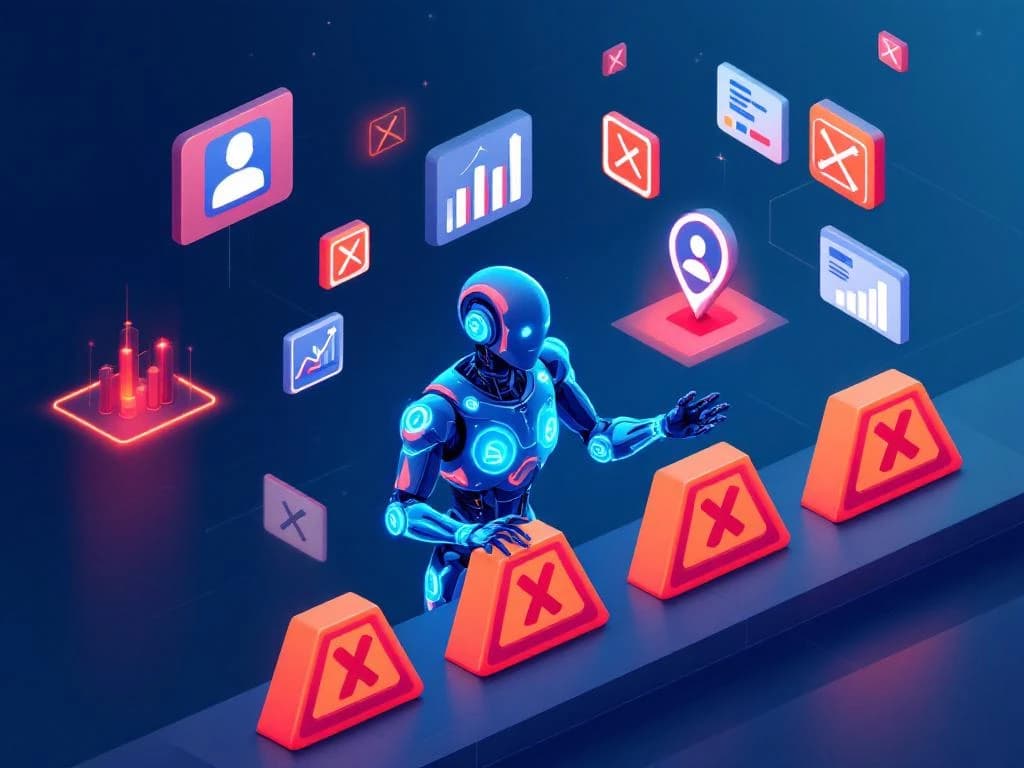
AI sales tools face several key limitations that affect their effectiveness in B2B environments. The main challenges include difficulty creating genuine personalisation, missing important context and nuance, compliance restrictions on platforms like LinkedIn, and potential risks when operating without proper human oversight. Understanding these limitations helps you make better decisions about when to use AI outreach versus human-led approaches.
What are the biggest personalisation challenges with AI sales tools?
AI sales tools struggle to create authentic personalisation because they rely on data patterns rather than genuine human understanding. Most AI outreach produces generic messages that feel robotic, even when they include personal details like company names or job titles. The technology can insert relevant information, but it often misses the emotional intelligence needed for meaningful connection.
The gap between automated efficiency and authentic human connection becomes obvious when AI generates messages that sound technically correct but emotionally flat. You might receive a message that mentions your recent LinkedIn post, but the AI doesn't understand the context or sentiment behind what you shared. This creates an uncanny valley effect, where prospects can sense that something feels off, even if they can't pinpoint exactly what.
AI leads generated through automated personalisation often have lower response rates because the messaging lacks the warmth and genuine interest that humans naturally provide. When prospects receive dozens of similar AI-generated messages daily, authentic personalisation becomes increasingly important for standing out. The challenge lies in scaling personal touch without losing the human elements that build trust and rapport.
Why do AI sales systems often miss important context and nuance?
AI sales systems miss context and nuance because they process information literally, without understanding underlying meanings, cultural subtleties, or emotional states. They can't read between the lines or pick up on implicit signals that human sales professionals naturally recognise during conversations and interactions.
Cultural differences present particular challenges for AI lead generation tools. What works in direct American business communication might be too aggressive for Japanese prospects or too casual for German executives. AI systems often apply one-size-fits-all approaches without considering cultural communication preferences, timing expectations, or relationship-building customs that vary significantly across different markets.
Emotional intelligence remains beyond current AI capabilities in sales contexts. The technology can't detect when a prospect is going through company restructuring, dealing with budget freezes, or feeling overwhelmed by too many sales approaches. Human sales professionals naturally adjust their timing and approach based on these subtle cues, while AI continues following programmed sequences regardless of circumstances.
Complex business situations require intuitive understanding that AI currently lacks. When a prospect mentions they're "evaluating options," AI might immediately push for a demo, while a human would probe deeper to understand their evaluation timeline, decision-making process, and potential concerns before suggesting next steps.
How do compliance and platform restrictions limit AI sales automation?
Platform restrictions significantly limit AI sales automation effectiveness because LinkedIn and other networks actively monitor for automated behaviour patterns. These platforms implement sophisticated detection systems that can identify non-human activity, leading to account restrictions or reduced reach for businesses that rely too heavily on aggressive automation.
LinkedIn's terms of service specifically prohibit automated messaging and connection requests that don't comply with its acceptable use policies. The platform continuously updates its detection algorithms, making it risky to use AI outreach tools that operate outside these guidelines. Account limitations can severely impact your ability to reach prospects through the platform.
Compliance requirements also constrain how AI sales tools can collect and process prospect data. GDPR, CCPA, and other privacy regulations limit what information AI systems can gather and how they can use it for outreach purposes. This affects the quality of AI leads and the personalisation depth that automated systems can achieve while remaining compliant.
The cat-and-mouse game between automation tools and platform detection creates ongoing uncertainty. What works today might trigger restrictions tomorrow, making it difficult to build reliable long-term sales processes around aggressive AI automation. Many businesses find themselves constantly adjusting their approach to stay within platform guidelines.
What happens when AI sales tools lack proper human oversight?
AI sales tools without human oversight can create significant problems, including inappropriate messaging, missed opportunities, and damage to brand reputation. Automated systems continue operating even when circumstances change, potentially sending insensitive messages during company crises or industry disruptions that require human judgment to navigate properly.
Inappropriate messaging represents one of the biggest risks of unsupervised AI outreach. The technology might send promotional messages to prospects who've recently experienced layoffs, company mergers, or other sensitive situations. Without human oversight, AI can't pause campaigns or adjust messaging when empathy and understanding are needed most.
Missed opportunities occur frequently when AI operates without human intervention. Prospects might respond with questions or objections that require nuanced responses, but AI systems often provide generic answers that fail to address specific concerns. This can turn interested prospects away when a human could have successfully moved the conversation forward.
Brand reputation suffers when AI generates messages that don't align with company values or communication standards. Automated responses might be too pushy, too casual, or completely miss the mark on tone and messaging. Once your brand becomes associated with poor AI-generated outreach, rebuilding trust with prospects becomes much more difficult.
How can you work around AI limitations while still scaling your sales efforts?
The most effective approach combines AI efficiency with human authenticity by using automation for research and initial qualification while reserving personal outreach for relationship building and closing. This hybrid strategy lets you scale your efforts without sacrificing the human connection that drives successful B2B relationships.
Use AI for lead research and data gathering, but have humans craft and send the actual outreach messages. AI excels at identifying prospects, finding contact information, and gathering background data that helps your sales team prepare for meaningful conversations. This preparation work scales efficiently while keeping the human touch in direct prospect communication.
Implement AI for follow-up scheduling and pipeline management rather than message generation. Automated systems can track response times, schedule follow-ups, and manage your sales pipeline effectively without creating the authenticity problems that come with AI-generated messaging. This keeps your outreach personal while automating administrative tasks.
We've developed our AI-driven campaign automation system to address these common limitations through intelligent human–AI collaboration. Our approach uses AI to build familiarity and trust before human sales professionals engage prospects directly. This parasocial selling methodology combines the efficiency of automation with the authenticity of human relationship building.
The key is knowing when to automate and when to personalise. Use AI for research, data management, and initial prospect identification, but rely on human insight for relationship building, objection handling, and closing conversations. If you're interested in learning how this balanced approach can work for your sales team, you can explore our pricing options to see which solution fits your needs.
Frequently asked questions
How can I tell if my current AI sales tool is actually hurting my response rates?
Monitor key metrics like open rates, response rates, and unsubscribe rates compared to your manual outreach. If you're seeing declining engagement, increased spam complaints, or prospects mentioning that your messages feel automated, it's time to reassess your approach. Track the quality of responses too - generic 'not interested' replies often indicate AI-generated messaging that lacks authentic personalisation.
What's the best way to start implementing a human-AI hybrid approach without disrupting existing sales processes?
Begin by using AI for research and lead qualification while keeping human involvement in all direct prospect communication. Start with a small segment of your pipeline to test the approach, then gradually expand based on results. This allows you to maintain current performance while building confidence in the hybrid methodology before scaling it across your entire sales operation.
How do I train my sales team to work effectively with AI tools without becoming overly dependent on automation?
Focus training on using AI as a research assistant rather than a replacement for human judgment. Teach your team to leverage AI for prospect intelligence, company insights, and timing optimization, while emphasizing the importance of crafting personalized messages and building genuine relationships. Set clear guidelines about when AI should and shouldn't be used in the sales process.
What are the warning signs that my AI outreach might be triggering platform restrictions?
Watch for decreased message delivery rates, reduced profile views, connection request limitations, or direct warnings from platforms like LinkedIn. If prospects aren't seeing your messages or your account features become restricted, you may be hitting automation limits. Regular monitoring of engagement metrics and platform notifications helps catch these issues early before they impact your entire sales operation.
How can I maintain compliance with data privacy regulations while still using AI for sales prospecting?
Ensure your AI tools only use publicly available information and obtain proper consent for data processing. Implement clear opt-out mechanisms, maintain detailed records of data sources, and regularly audit your AI systems for compliance. Work with legal counsel to establish data handling policies that meet GDPR, CCPA, and other relevant regulations while still enabling effective prospecting.
What's the most common mistake companies make when trying to scale sales with AI?
The biggest mistake is trying to automate the entire sales process, especially relationship building and personalized communication. Companies often get seduced by the promise of complete automation and lose the human elements that actually close deals. The most successful approach uses AI to enhance human capabilities rather than replace human judgment and emotional intelligence.
How do I measure ROI when implementing a human-AI hybrid sales approach?
Track both efficiency gains and relationship quality metrics. Measure time saved on research and administrative tasks, while also monitoring response rates, meeting conversion rates, and deal closure rates. Compare the cost of AI tools plus human time against your previous fully manual approach. The best hybrid systems show improved efficiency without sacrificing relationship quality or deal conversion rates.