How do you train your team on AI sales?
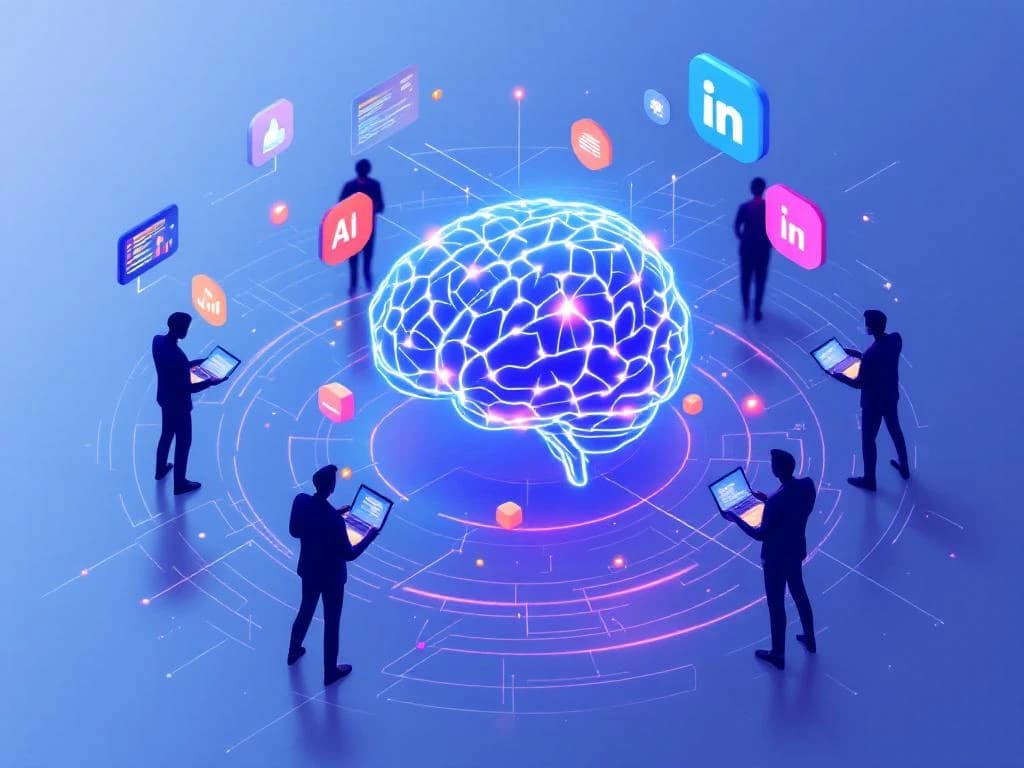
Training your team in AI-driven sales involves teaching them to use artificial intelligence tools effectively while maintaining authentic relationship building. It requires both technical instruction on AI platforms and strategic guidance on balancing automation with personal connection. The process includes hands-on practice, addressing concerns about AI adoption, and developing new workflows that enhance rather than replace human sales skills.
What does AI sales training actually involve for your team?
AI sales training encompasses three core areas: technical proficiency with AI tools, strategic understanding of when to use automation versus human interaction, and mindset adaptation to working alongside artificial intelligence. Your team needs to learn how AI can handle repetitive networking tasks at unprecedented scale while preserving the relationship authenticity that drives B2B success.
The technical component involves mastering AI-powered platforms that can automate connection requests, personalise outreach messages, and classify prospect responses. Team members learn to configure automation settings, interpret AI-generated insights, and manage automated workflows effectively. This includes understanding how AI analyses LinkedIn profiles to create authentic personal touches and generates conversation flows based on prospect behaviour.
Beyond software operation, your team must grasp the strategic framework of AI-assisted sales development. This involves learning when to let AI handle routine tasks like initial outreach and engagement, and when human intervention becomes necessary for complex relationship building. Training covers the four-function AI framework: outreach strategy creation, message personalisation, response classification, and conversation adaptation.
The mindset shift is equally important. Team members need to understand that AI amplifies human capabilities rather than replacing them. Training addresses how to maintain emotional intelligence and cultural context while leveraging AI for scale and consistency.
How do you get your sales team comfortable with AI tools?
Start by demonstrating immediate value rather than overwhelming your team with technical features. Show them how AI can eliminate time-intensive manual outreach tasks they currently struggle with, such as crafting individual LinkedIn messages and researching prospects. This practical approach helps them see AI as a solution to existing pain points rather than an additional layer of complexity.
Address common fears directly through open discussion. Many sales professionals worry that AI will make their role redundant or that automated messages will damage client relationships. Explain how modern AI sales tools focus on enhancing relationship authenticity rather than creating robotic interactions. Share examples of how AI can analyse engagement patterns for lead qualification while leaving strategic decision-making to human expertise.
Implement gradual adoption by starting with one AI function at a time. Begin with simple tasks like automated engagement boosting, where AI distributes daily likes across relevant industry content. This low-risk introduction allows team members to see positive results without fear of damaging important relationships.
Create internal champions by identifying team members who show early enthusiasm for AI tools. These advocates can provide peer support and share success stories that resonate more effectively than management directives. Peer learning systems often overcome resistance faster than formal training sessions.
Provide safety nets by maintaining full user control over automation levels. Show your team that they can set any conversation type to manual handling for high-value prospects or require human approval for automated responses. This control reduces anxiety about AI making inappropriate decisions.
What's the most effective way to structure AI sales training sessions?
Design training sessions around 90-minute blocks, with hands-on practice comprising at least 60% of each session. This duration allows for concept explanation, demonstration, practice, and Q&A without causing information overload. Schedule sessions weekly over four to six weeks rather than as intensive multi-day programmes to allow practical application between sessions.
Structure each session with a specific AI function focus. Session one covers automated network building and connection strategies. Session two addresses message personalisation and conversation starters. Session three focuses on response classification and conversation adaptation. Session four covers lead scoring and qualification criteria. This progression builds complexity gradually.
Accommodate different learning styles by combining multiple approaches within each session. Visual learners benefit from screen-sharing demonstrations of AI platforms. Kinesthetic learners need hands-on practice with actual prospect interactions. Auditory learners respond well to discussion of strategy and best practices. Include all three elements in every training session.
Create realistic practice scenarios using your actual target market and prospect types. Rather than generic examples, use your industry-specific challenges and typical customer profiles. This relevance increases engagement and helps team members see immediate applications for their daily work.
Build in troubleshooting time for common challenges. Address situations such as handling complex prospect responses that require human intervention, managing automation settings for different campaign types, and interpreting AI-generated insights for strategic decision-making. Practical problem-solving builds confidence more effectively than perfect-scenario demonstrations.
How do you measure if your AI sales training is working?
Track adoption rates by monitoring how frequently team members actively use AI features after training completion. Measure daily active usage, feature utilisation rates, and progression from basic to advanced AI functions. Low adoption often indicates training gaps or ongoing support needs rather than tool inadequacy.
Monitor productivity improvements through quantifiable metrics like daily outreach volume, response rates to AI-personalised messages, and time saved on manual prospecting tasks. Compare pre-training baseline performance with post-training results over 30-, 60-, and 90-day periods to account for learning-curve variations.
Assess the quality of AI-assisted interactions by reviewing conversation outcomes and prospect feedback. Track metrics such as meeting booking rates from automated sequences, positive response sentiment, and progression through sales-funnel stages. Quality indicators matter more than pure volume increases.
Gather qualitative feedback through regular team surveys and one-on-one discussions. Ask specific questions about confidence levels with different AI functions, perceived value of automation features, and remaining challenges or concerns. This feedback identifies areas needing additional training focus.
Measure business impact through pipeline metrics and revenue attribution. Track how AI-assisted leads perform compared to traditional prospecting methods. Monitor lead scoring accuracy, qualification rates, and conversion timelines. Revenue impact provides the ultimate validation of training effectiveness.
Establish feedback loops for continuous improvement by reviewing AI-generated content quality, automation rule effectiveness, and team suggestions for workflow enhancements. Regular assessment allows training refinement based on actual usage patterns.
What ongoing support does your team need after initial AI training?
Provide regular refresher sessions every quarter to address skill gaps and introduce new AI capabilities. Technology evolves rapidly, and team members need updates on enhanced features, improved algorithms, and new integration possibilities. These sessions also reinforce best practices and address any bad habits that may have developed.
Establish internal mentorship programmes where early AI adopters support colleagues who need additional guidance. Create formal buddy systems pairing confident users with those requiring more support. This peer-to-peer assistance often proves more effective than top-down training approaches.
Develop advanced skills workshops for team members ready to explore sophisticated AI applications. Cover topics such as custom automation workflows, advanced lead scoring criteria, and integration with existing CRM systems. Progressive skill development maintains engagement and maximises AI platform utilisation.
Create resource libraries with quick-reference guides, video tutorials, and troubleshooting documentation. Team members need accessible support materials when facing specific challenges during daily work. Self-service resources reduce dependence on formal support while building confidence.
Implement regular performance reviews that include AI tool utilisation and effectiveness. Discuss individual challenges, celebrate successes, and identify opportunities for improved AI integration. Ongoing coaching ensures sustained adoption and continuous improvement.
Stay current with AI developments through vendor updates, industry publications, and user community participation. Share relevant insights with your team to maintain competitive advantage and optimal tool utilisation.
How can Famelab help streamline your team's AI sales training?
We've designed our LinkedIn automation platform with intuitive interfaces that reduce training complexity while delivering sophisticated AI capabilities. Our system's four-function framework makes it easier for teams to understand how AI handles outreach strategy creation, message personalisation, response classification, and conversation adaptation without overwhelming technical detail.
Our AI-driven campaign automation system includes built-in training resources and guided setup processes. Team members can learn through hands-on experience with real prospects, while safety controls prevent costly mistakes during the learning phase. The platform provides contextual help and suggestions that serve as ongoing training tools.
We offer comprehensive onboarding support that includes personalised training sessions tailored to your team's specific industry and sales processes. Our approach addresses both technical proficiency and strategic implementation, ensuring your team understands not just how to use AI features, but when and why to apply them effectively.
The platform's user-control features allow gradual AI adoption at a comfortable pace for different team members. Each person can start with manual oversight of all AI functions and progressively increase automation as confidence builds. This flexibility accommodates varying comfort levels with technology adoption.
Our ongoing educational materials include regular webinars, best-practice guides, and case-study sharing that keep your team current with AI sales developments. We also provide access to a community of users who share insights and strategies for maximising AI sales effectiveness.
For teams ready to explore our comprehensive approach to AI-powered LinkedIn automation, you can learn more about our platform options and discover how we simplify the transition from traditional sales methods to AI-enhanced relationship building.
Frequently asked questions
How long does it typically take for a sales team to become proficient with AI tools?
Most sales teams achieve basic proficiency within 4-6 weeks of structured training, but full mastery typically takes 2-3 months of regular use. The timeline depends on your team's technical comfort level and the complexity of your sales processes. Teams that practice consistently between training sessions and start with simpler AI functions tend to progress faster than those attempting to implement all features simultaneously.
What should I do if some team members resist using AI tools despite training?
Focus on identifying the root cause of resistance—whether it's fear of job displacement, concern about relationship authenticity, or simply technology anxiety. Address these concerns through one-on-one conversations and pair resistant team members with AI champions for peer mentoring. Sometimes offering additional hands-on support or allowing them to start with the most basic AI functions can help build confidence gradually.
How do I prevent AI-generated messages from sounding robotic or impersonal?
Train your team to always review and customise AI-generated content before sending, adding specific personal touches based on prospect research. Set up AI tools with detailed input about your brand voice, industry terminology, and typical customer pain points. The key is using AI as a starting point for personalisation rather than a final solution—human oversight ensures authenticity while AI handles the initial heavy lifting.
Can AI tools integrate with our existing CRM and sales processes?
Most modern AI sales platforms offer integrations with popular CRM systems like Salesforce, HubSpot, and Pipedrive. However, you'll need to plan for data synchronisation, workflow adjustments, and potential custom integrations depending on your specific tech stack. Include your IT team in the training process and test integrations thoroughly before full deployment to avoid disrupting existing sales processes.
What's the biggest mistake teams make when implementing AI sales training?
The most common mistake is trying to automate everything at once instead of gradually building AI capabilities. Teams often skip the strategic training component and focus only on technical features, leading to poor results and decreased confidence. Start with one AI function, ensure team mastery, then progressively add complexity while maintaining focus on relationship quality over quantity of outreach.
How do I ensure AI-assisted outreach complies with LinkedIn's terms of service?
Choose AI platforms that prioritise compliance and mimic natural human behaviour rather than aggressive automation. Train your team on daily connection limits, appropriate message timing, and the importance of genuine engagement over volume. Regularly review LinkedIn's terms of service updates and ensure your AI tools include built-in compliance features like connection limits and natural activity patterns.
What ROI should I expect from investing in AI sales training?
Well-trained teams typically see 40-60% increases in daily outreach capacity and 15-25% improvements in response rates within the first quarter. However, ROI varies significantly based on your industry, target market, and current sales processes. Focus on measuring time savings, lead quality improvements, and conversion rates rather than just volume increases—sustainable ROI comes from enhanced relationship building, not just more connections.